

Men’s hoodies combine performance, comfort, and brand identity in a single garment. From streetwear to sports uniforms, their success depends on construction details—especially shoulder structure, rib recovery, and pocket engineering. A technically sound hoodie not only fits better but also lasts longer, which is why leading brands rely on professional men’s hoodies suppliers with advanced pattern and sewing capabilities.
🧵 1. Shoulder Balance: The Foundation of Fit
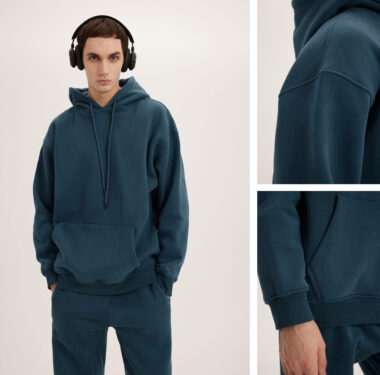
The shoulder line is the backbone of a hoodie’s structure. A well-balanced shoulder ensures stability, prevents sleeve twisting, and maintains the garment’s silhouette after repeated wear.
For men’s hoodies, balance is achieved through:
-
Shoulder slope: Typically 18–20°, offering natural drape across the chest.
-
Reinforced shoulder tape: A cotton twill or bias-cut strip stitched along the seam to prevent stretching.
-
Drop-shoulder patterns: Used in oversized or fashion-forward designs for relaxed proportions.
Incorrect shoulder pitch can make the garment look sloppy or cause forward-pulling sleeves. Professional factories conduct dummy fittings to check shoulder fall and alignment before bulk cutting begins.
Partnering with experienced Men’s Hoodies Suppliers ensures precise pattern symmetry and balanced construction across all size runs—critical for both retail and team programs.
👕 2. Rib Recovery and Elasticity Testing
Ribs at the cuffs and hem maintain garment shape and affect the perceived quality. A high-quality rib should recover quickly after being stretched but still feel comfortable on the wrist or waist.
Factories measure elastic recovery by stretching the rib 20% and recording its rebound percentage:
-
Premium rib (95% recovery): Retains shape for over 50 wash cycles.
-
Standard rib (85–90%): Common in mid-range retail hoodies.
-
Low-grade rib (<80%): Leads to loose cuffs and distorted hems after a few wears.
Composition plays a big role. Cotton/elastane (95/5) ribs combine softness with resilience, while poly/cotton (60/40) blends add cost efficiency. Rib tension must also align with body fabric GSM to prevent uneven puckering or rolling.
🧩 3. Pocket Design and Functionality
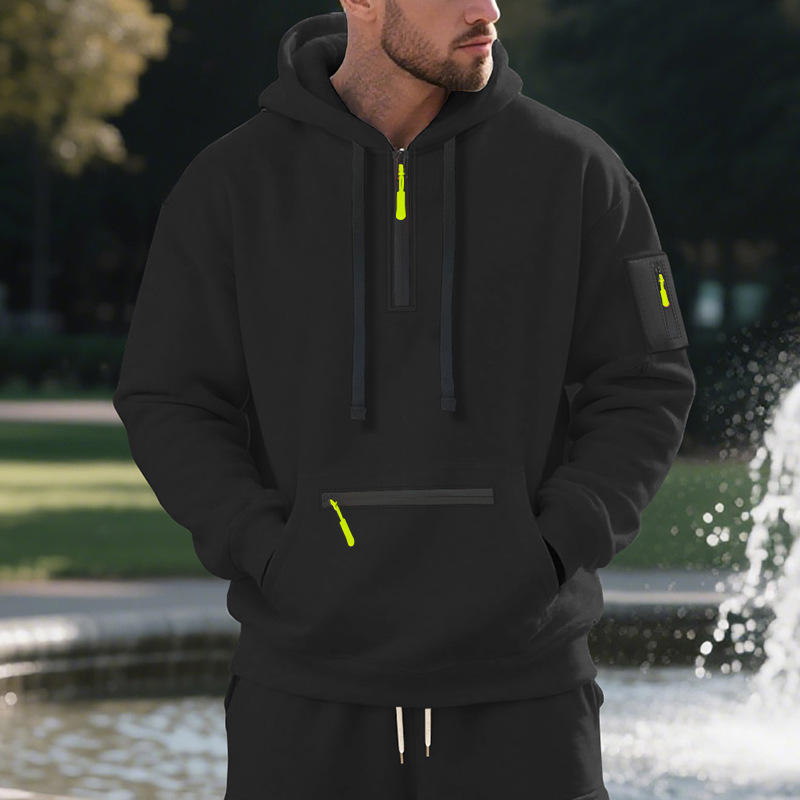
The front pocket defines a hoodie’s personality. Functionality and symmetry are crucial, especially for men’s or athletic fits. Common pocket types include:
-
Kangaroo Pocket: A single, continuous pouch for classic styling.
-
Side-Entry Pockets: Used in athletic hoodies to streamline appearance.
-
Hidden-Zip Pockets: Adds security for smartphones and accessories.
Industrial sewing machines ensure pocket edges are bar-tacked for reinforcement. For premium markets, edge clean-finish and twin-needle topstitching enhance durability and appearance.
A good pocket should align perfectly with side seams and maintain a 1.5–2 cm seam margin, ensuring smooth shape after washing.
🧶 4. Fabric Density and Drape
Fabric weight determines how a hoodie behaves when worn. Men’s models often favor midweight to heavyweight GSM (350–450) for durability and structure. High-torque yarns or brushed fleece backs add stability without stiffness.
Drape testing involves hanging finished samples for 24 hours to measure vertical stretch. Controlled elasticity (≤3%) guarantees shape retention over time. These standards help maintain a crisp silhouette suitable for retail display and uniform presentation.
⚙️ 5. Stitching and Panel Reinforcement
Durability starts at the seams. Key stitching methods for men’s hoodies include:
-
Flatlock seams: Reduce bulk in athletic wear.
-
Overlock + coverstitch combination: Used for side panels and hood joins.
-
Twin-needle topstitching: Strengthens visible edges and adds a clean retail finish.
Factories often perform seam slippage tests, applying 7–9 kg of tension to ensure stitching integrity. A-grade manufacturers maintain stitching density between 10–12 SPI (stitches per inch) for consistency.
🧪 6. Shrinkage, Torque, and Recovery Control
Shrinkage control is vital for uniform programs. Pre-shrunk fleece and controlled drying minimize length variation between batches. Torque testing—rotating garments 90° post-wash—confirms fabric stability. Acceptable tolerance is within ±2%.
Rib and fabric recovery are tested together to maintain proportional tension between body and trim after repeated stretching. This prevents twisting hems and misaligned side seams over time.
🧭 7. Labeling, Branding, and Compliance
Men’s hoodies for export markets must follow regional compliance and labeling regulations. Factories ensure:
-
Fiber composition accuracy (ISO 1833)
-
Care instruction durability (ISO 6330 wash test)
-
Country of origin and size code clarity
Private label buyers can specify woven labels, heat-transfer prints, or silicone badges, depending on the target retail segment.
📦 8. Teamwear and Bulk Order Strategy
For schools, clubs, or corporate programs, consistency is everything. Teamwear requires unified color matching, durable stitching, and standardized sizing across all deliveries.
Reliable Hoodie Suppliers coordinate bulk production calendars, offer Pantone-matched dye lots, and manage long-term replenishment schedules—ensuring every hoodie looks identical, season after season.
🏁 Final Thoughts
A well-made men’s hoodie is engineered, not improvised. From shoulder reinforcement to rib elasticity, every millimeter contributes to comfort and longevity.
By collaborating with professional men’s hoodies suppliers, brands can elevate everyday basics into premium products that perform equally well in retail and team environments. When structure meets precision, even the simplest hoodie becomes a lasting statement of craftsmanship and reliability.